Every product here arrived in pieces.
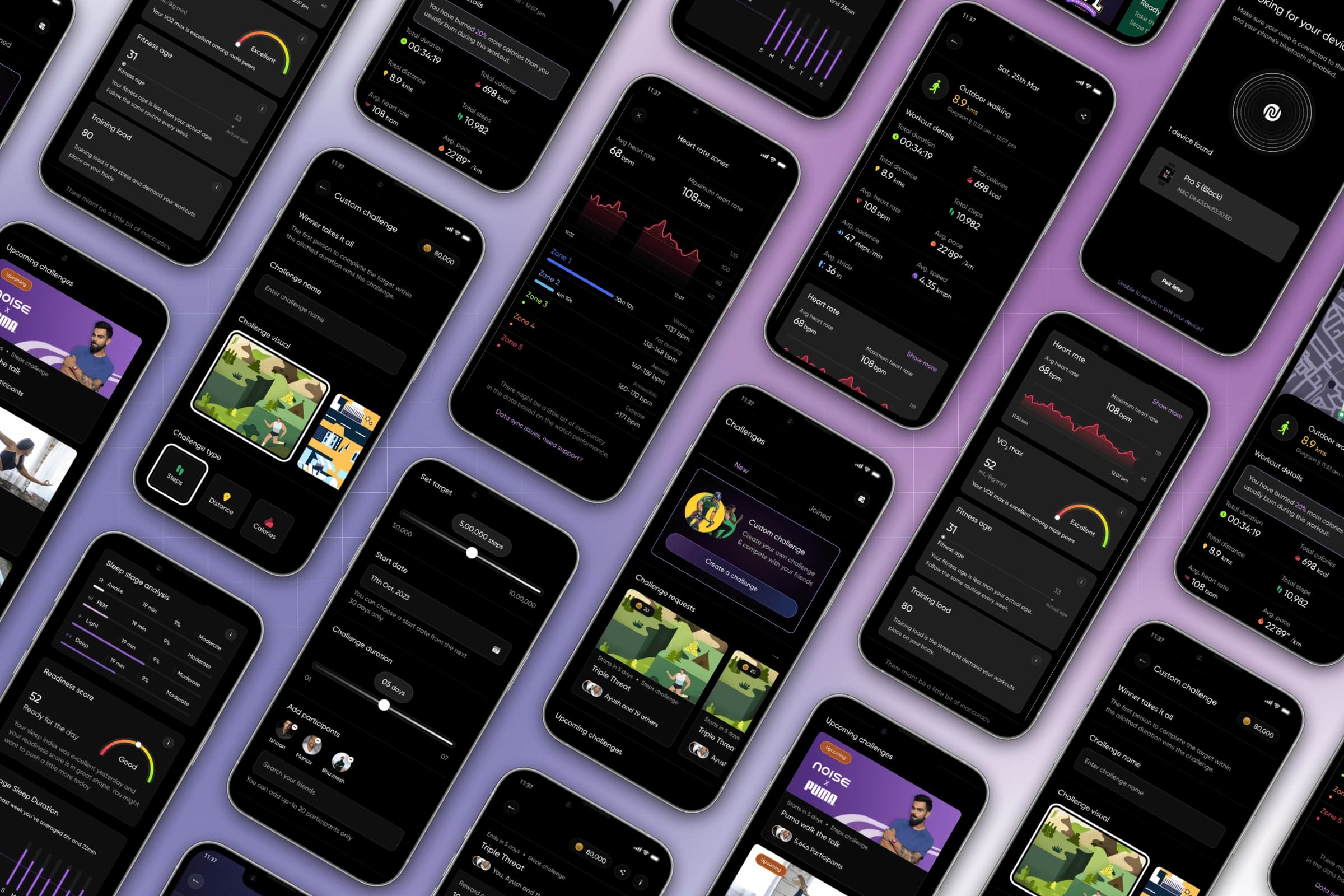
Handed a white-labelled app. Gave back a product.
NoiseFit wasn't Noise's own app when I got it: a vendor's white-label build, split per device family. I rebuilt it into one product across devices, then kept adding the pieces that made it an ecosystem: community, challenges, NoiseCoins, the shop, the Noise Premier League.
The design team needed a product. I designed the one we run on.
PDX Go is the internal platform the product design org at Group Bayport operates from: every vertical in one place, targets and actuals week on week, who's on what, report generation, and the team's knowledge out of people's heads.
How the pieces actually get connected.
- 01
Understand
Before anything gets drawn, I go and find what is actually broken. A brief describes a symptom often enough that starting from it is how teams ship the wrong thing beautifully.
- 02
Research
Users, market, and what the stack can actually carry. Three passes, because a finding that shows up in only one of them is usually a preference wearing the costume of a problem.
- 03
Ideate
Flows, information architecture, and more than one honest option. The first idea gets built about as often as the third does, and I would rather learn that on paper than in a build.
- 04
Design
Structure first, surface second. Wireframes settle what goes where and what it costs. The high fidelity pass is where the thing stops being a diagram and starts being a product.
- 05
Prototype
Clickable, in someone's hands, and watched. A prototype exists to make the flow fail early, while a fix is still one file instead of one sprint.
- 06
Ship
A handoff a developer can build from, or I build it myself. Nothing counts until it is live and being used by people who were never in the room while it was designed.
Through RepIndia
- Adani
- Canon
- Lenskart
- Duroflex
Through First Principle Studio
- Hero MotoCorp
- Haldiram's
- Zydus
- Pedal Start
- Duroflex
In-house
- Noise
- Subtra
- Group Bayport